Messenger Security
Privacy in Messenger Applications
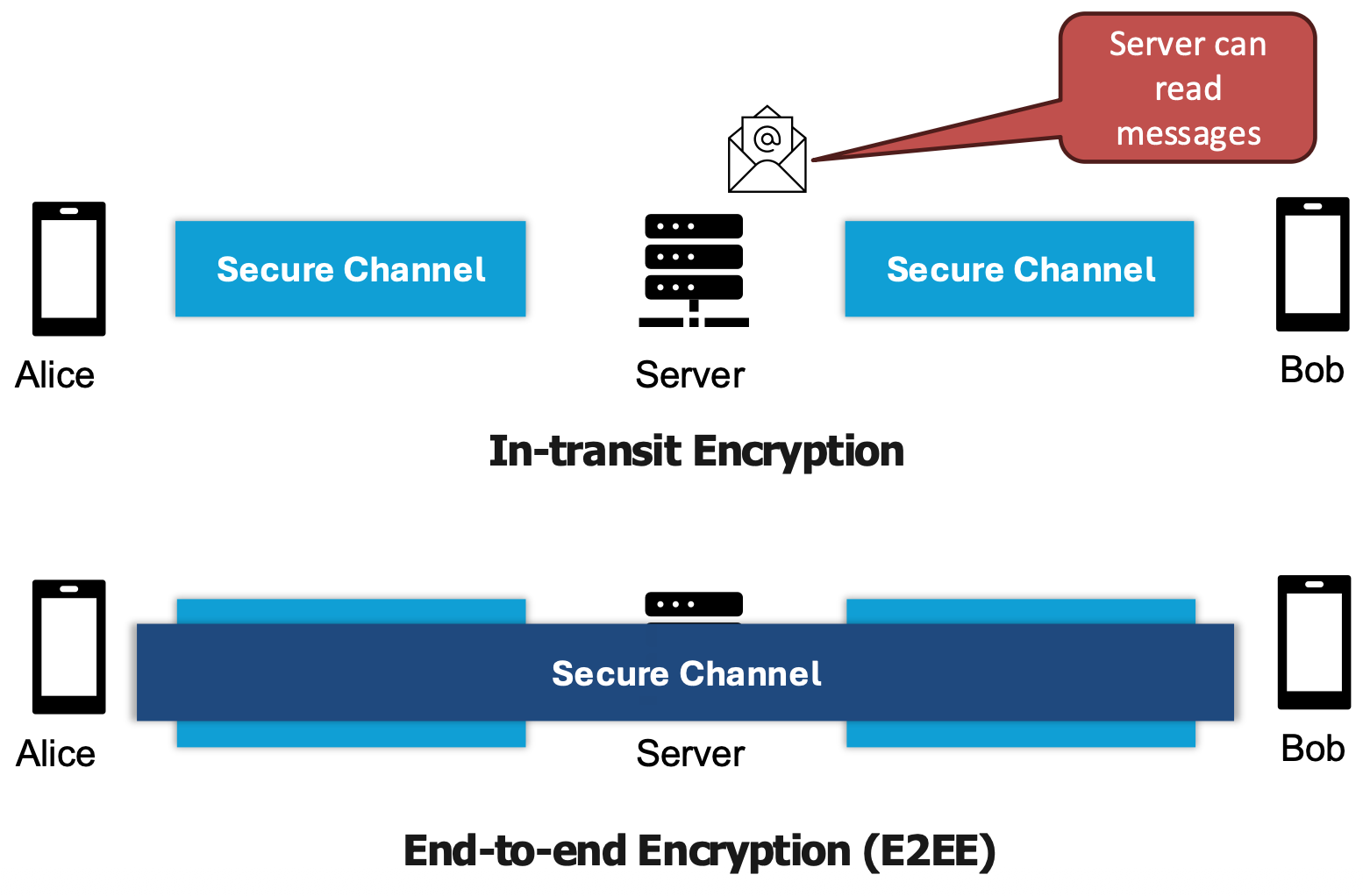
Two different architectures:
- In-transit Encryption
- End-to-end Encryption
E2EE Messaging
Challenges:
- What about offline parties?
- Group chats?
Cryptography Perspective:
- Signature keys for authenticity
- Ephemeral key exchange (EDH) ⇒ Perfect forward secrecy
- Encrypt messages with AES
- As seen in TLS, IPsec
Practically:
- Email with S/MIME, OpenPGP
- S/MIME over XMPP (RFC 6120, RFC 3923)
- Problem: Usability
- Sender needs certificate or public key of receiver
- Problem: Usability
Desired Properties
Ideal Goal: Private Conversation, face-to-face in a private room
- Functionality
- Asynchronous messaging
- Efficient group messaging
- multi-device support
- Security / Privacy:
- Secure Channel
- Perfect Forward Secrecy
- Eve entering the room does not learn about past conversations.
- Post-compromise security
- Eve leaving the room does not learn about future conversations.
- Maybe: Plausible deniability
- Eve cannot prove that Alice talked to Bob
Messaging Layer Security (MLS) Protocol
Groups, Groups, Groups
- MLS is purpose-built for group communication
- Target: Large groups with ~50’000 members!
- E.g. Alice’s phone, computer, and Bob’s microwave
SC and SAs
-and-Secure-Association-(SA).png)
Same as MACsec
Key Derivation
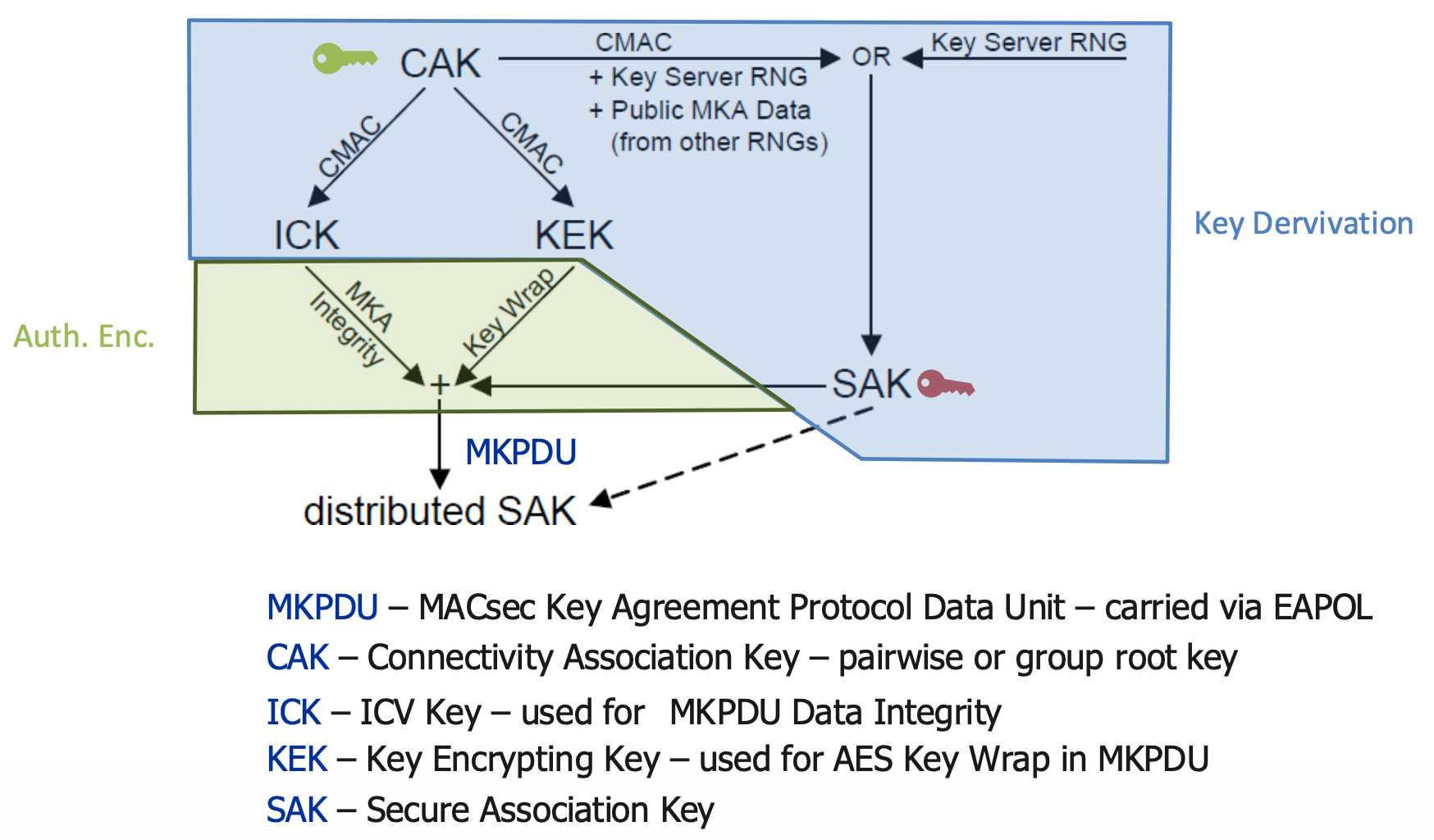
Same as MACsec
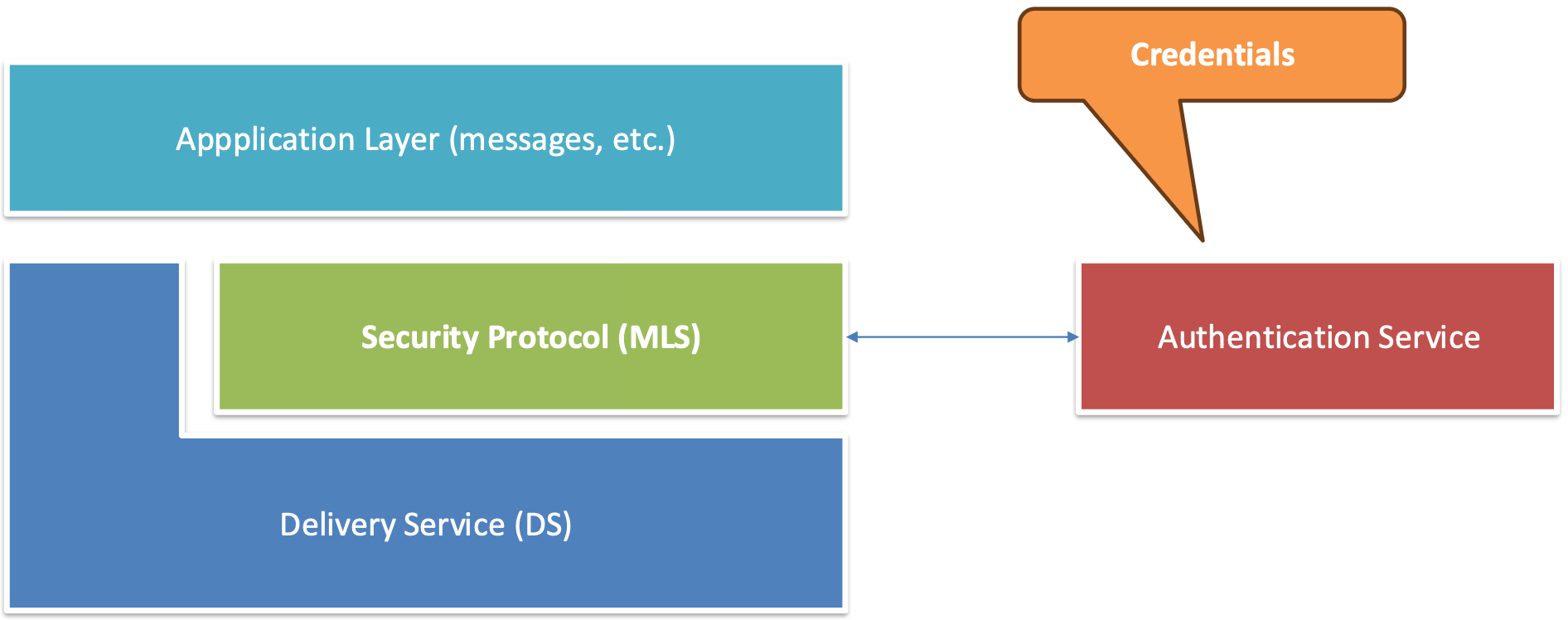
Protocol Stack
Epochs
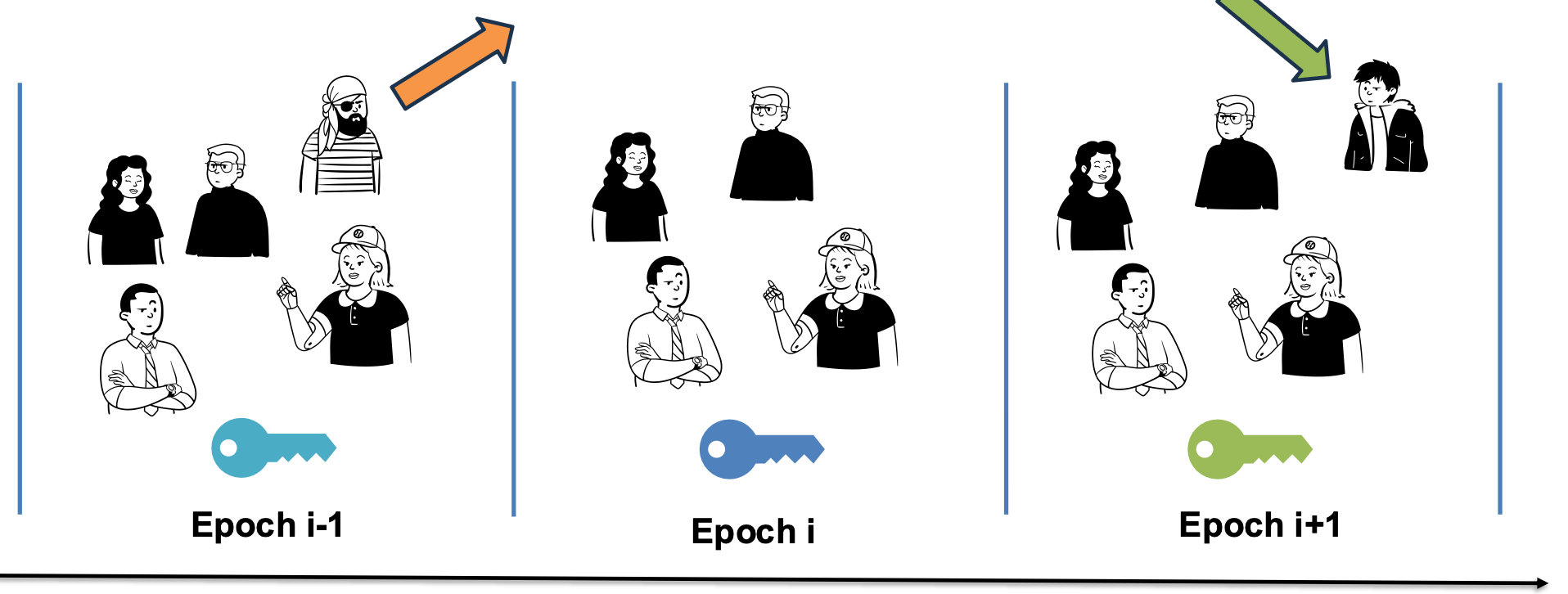
Parties may enter or leave the group
- Ex-member should not be able to read messages
- New members should not read old messages
Secure Communication
- Hybrid Public Key Encryption (RFC 9180)
- Key Generation:
- Key Encapsulation Mechanism (KEM)
- e.g. DH based
- Key Derivation Function (KDF)
- e.g. HMAC
- Key Encapsulation Mechanism (KEM)
- Key Generation:
- Encryption:
- Authenticated Encryption
- AES-GCM
- Authenticated Encryption
Key Ratcheting
Solves: Forward Secrecy
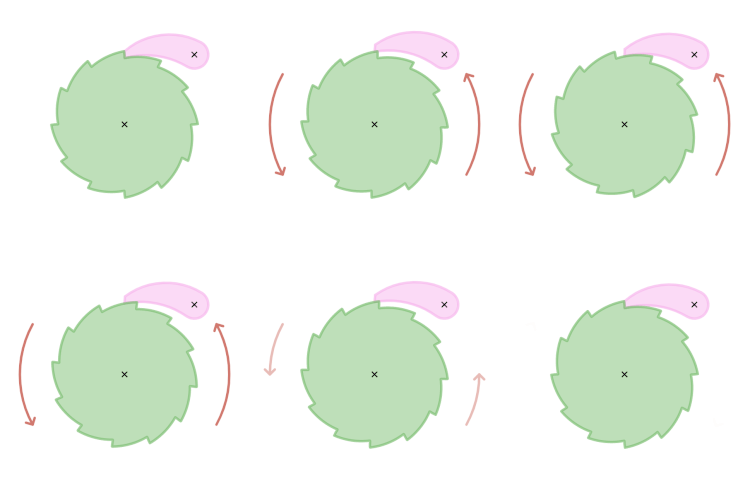
- Idea: Evolve current key and delete old one
- ⇒ Ephemeral Keys, ideally one per message
- (Too) simple idea: Hash chain (KDF)
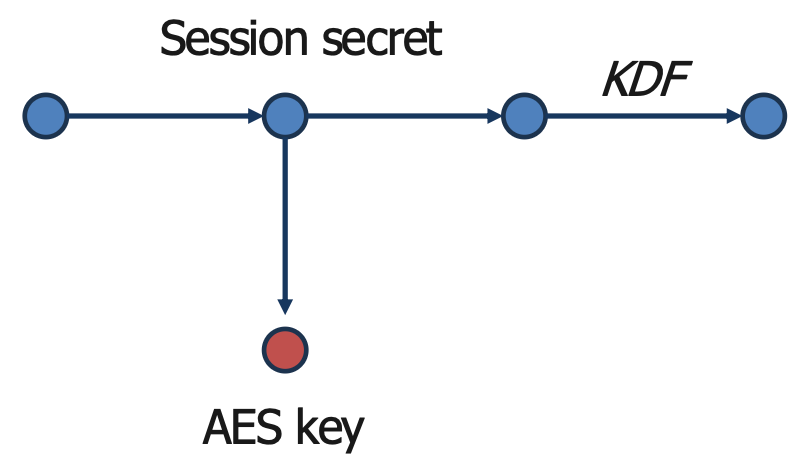
Problem: Post Compromise Issue
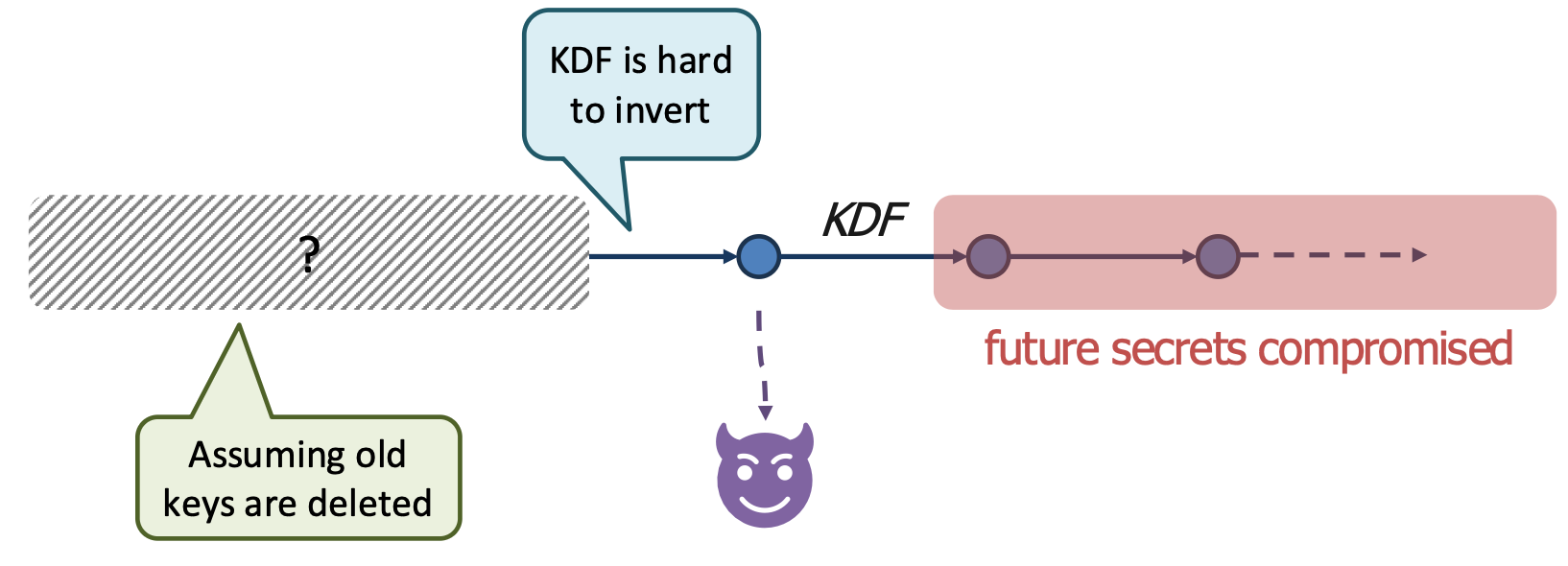
Double Ratchet
Solves: Post Compromise Issue
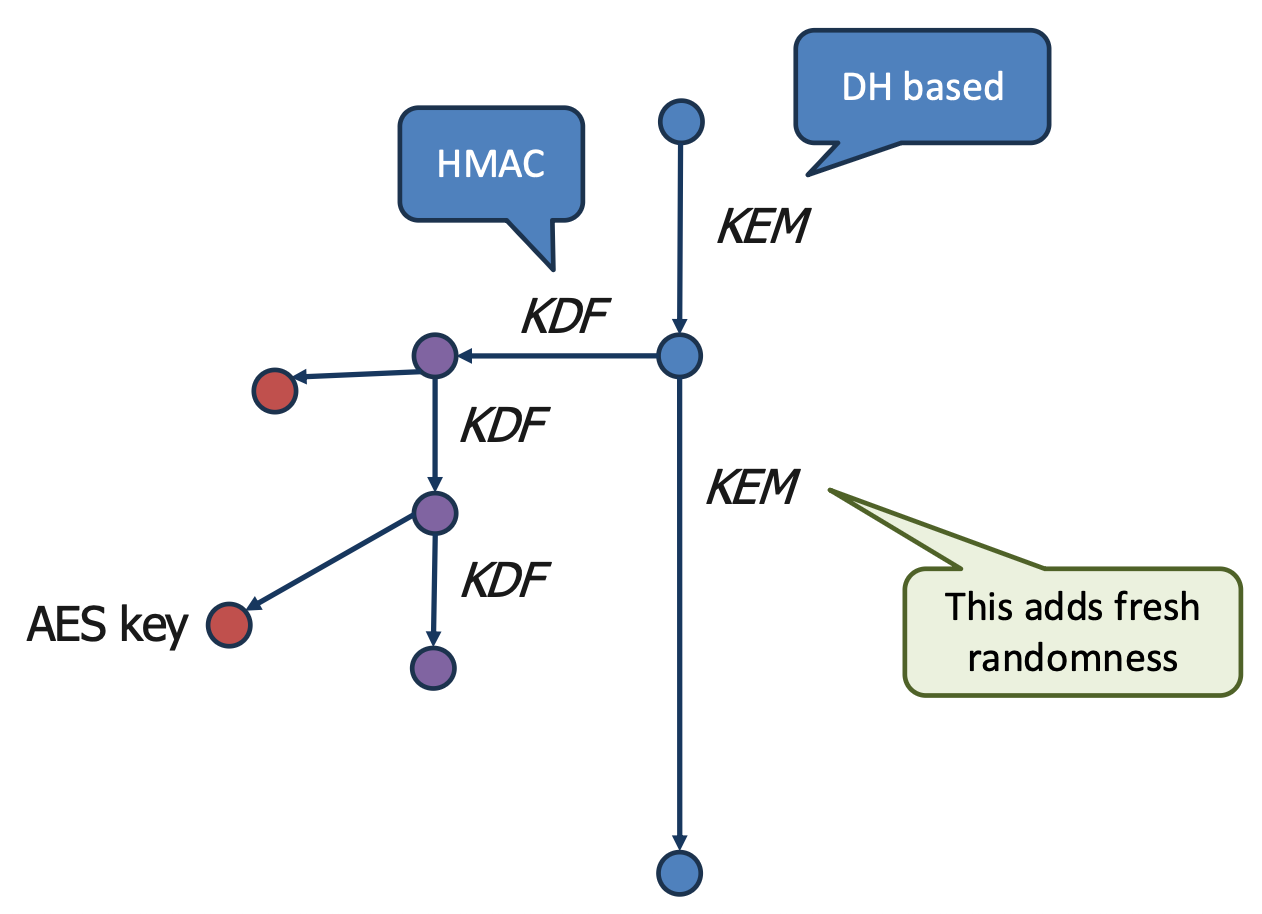
- Combine KEM with KDF Ratchet
- Allows for offline messaging
- Use KDF to evolve key
Scaling of Key Exchange
- Double ratchet built for two party setting
- Signal: Groups are just pairwise secure channels
- Becomes inefficient for large (> 300) groups
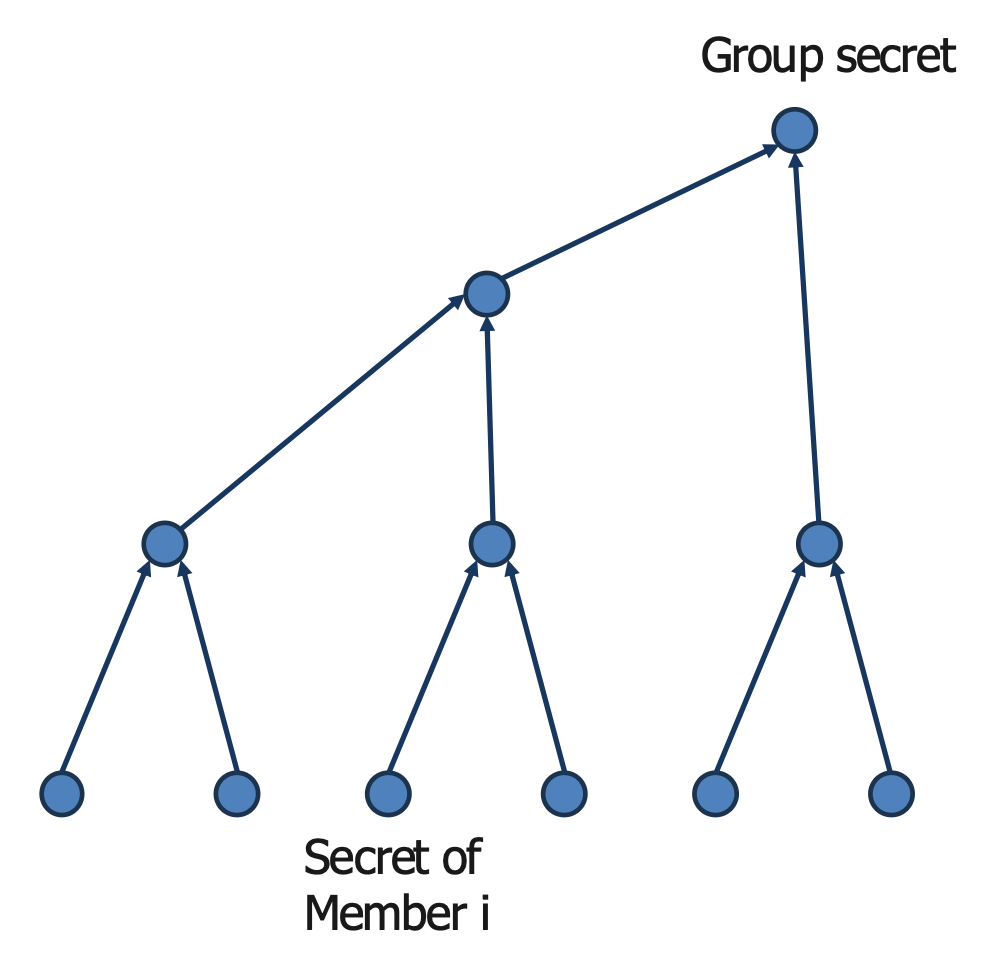
- Solution: Tree based key structure
- Ratchet the tree (starting at leaf)
Limitations of E2EE
Encryption Ends on the Device
- End device (phone, computer) contains all messages
- Often unencrypted (if device is unlocked)
- Spyware can exfiltrate them
- E.g., Pegasus (NSO group)
- Backups of the end device contain the messages
- Often not encrypted by default
Lawful Interception
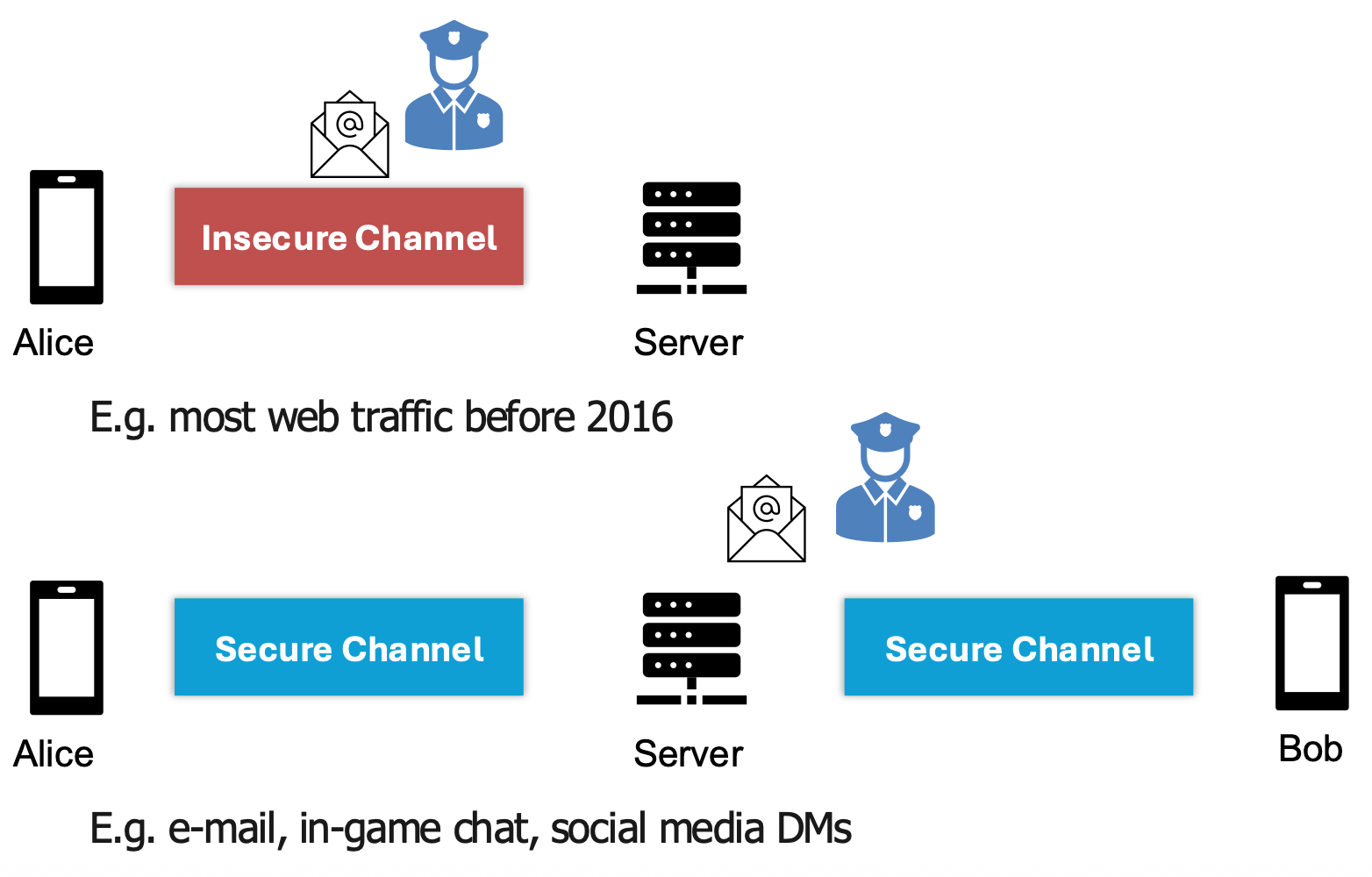
With E2EE:
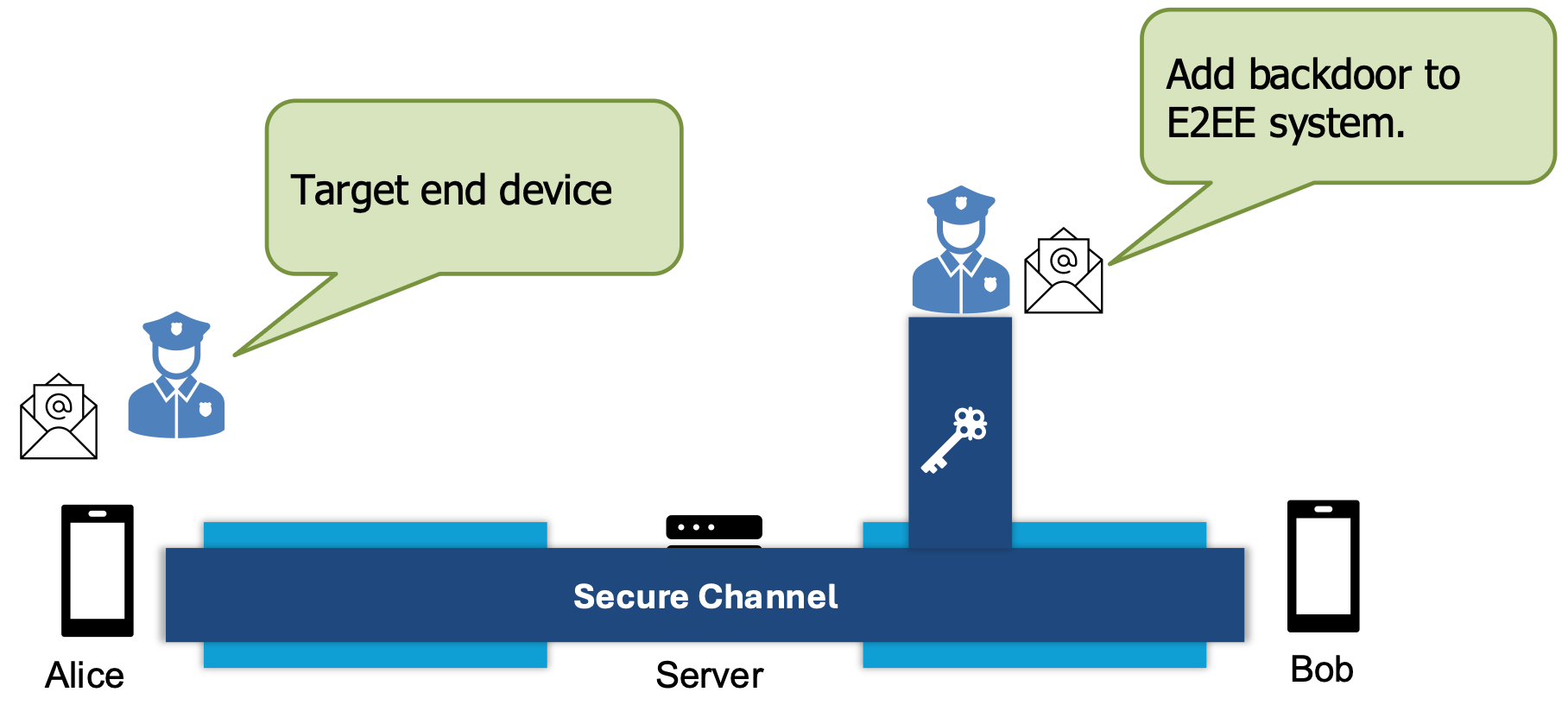
Relevant Note(s):