Asymmetric Key Exchange
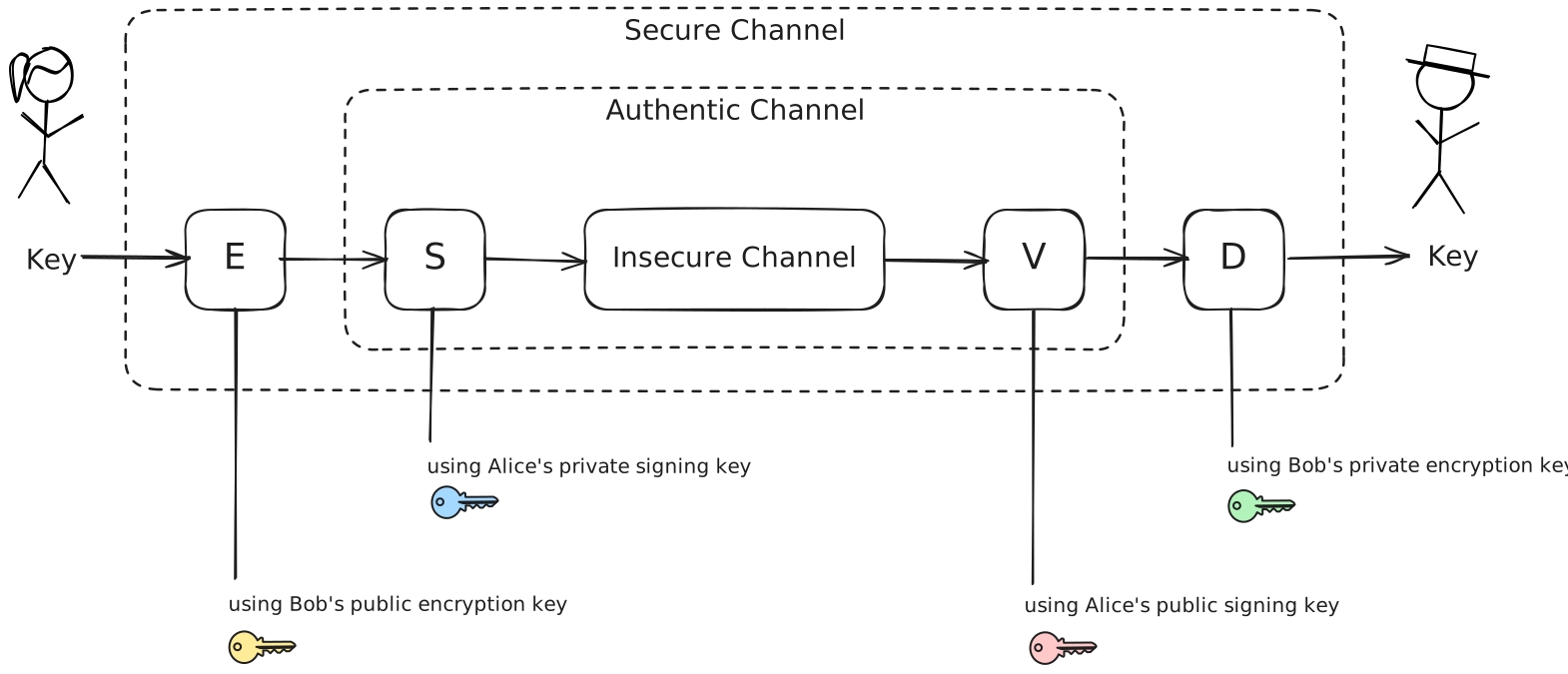
- Setup
- Alice has
- Her private signing key (BLUE KEY)
- Bob’s public encryption key (YELLOW KEY)
- E.g. via X.509 certificate of Bob
- Bob has
- Alice’s public signing key (RED KEY)
- E.g. via X.509 certificate of Alice
- His private encryption key (GREEN KEY)
- Alice’s public signing key (RED KEY)
- Alice has
- Process
- Alice generates a random session key
k - Alice encrypts
kusing Bob’s public key (for confidentiality) - Alice signs the result using her private key (for authenticity)
- Alice sends the signed ciphertext to Bob
- Bob verifies the signature
- Bob decrypts the message to retrieve
k
- Alice generates a random session key
- Limitations:
- Replay-attack problem:
- An adversary could resend the message.
- Solution: Add a challenge-response mechanism.
- No Perfect Forward Secrecy (PFS)
- Attacker with access to long term private key can decrypt past messages
- Replay-attack problem:
- Often used as part of hybrid encryption
- Encrypt message with AES under random key
- Encrypt key using public key of recipient
Relevant Note(s):